About Ceramic Fiber Blanket
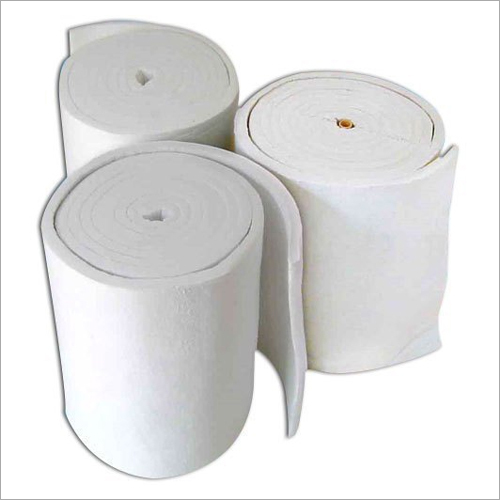
Cera wool fiber blanket, often simply referred to as ceramic fiber blanket, is a type of high-temperature insulation material made from spun ceramic fibers. These blankets are lightweight, flexible, and have excellent insulating properties, making them widely used in various industrial applications where thermal insulation is required.
Here are some key characteristics and applications of cerawool fiber blankets:
-
High-Temperature Insulation: Cerawool fiber blankets are capable of withstanding temperatures up to 2300 F (1260 C) and even higher in some grades. This makes them ideal for insulating equipment and structures exposed to extremely high temperatures, such as furnaces, kilns, boilers, and pipes.
-
Low Thermal Conductivity: The fibrous structure of ceramic fiber blankets results in low thermal conductivity, meaning they effectively reduce heat transfer. This property helps in conserving energy and maintaining temperature uniformity in industrial processes.
-
Lightweight and Flexible: Cerawool blankets are lightweight and easy to handle, cut, and install. Their flexibility allows for wrapping around complex shapes and irregular surfaces, making them versatile for various insulation applications.
-
Chemical Resistance: Ceramic fiber blankets exhibit good resistance to most chemicals, acids, and alkalis. This makes them suitable for use in environments where exposure to corrosive substances is a concern.
-
Non-Combustible: Cerawool fiber blankets are non-combustible and do not emit toxic gases when exposed to fire. This property enhances their safety in high-temperature applications.
-
Thermal Shock Resistance: They have good thermal shock resistance, meaning they can withstand rapid changes in temperature without cracking or spalling.
Applications of cerawool fiber blankets include:
- Insulation for industrial furnaces, kilns, and ovens.
- Insulation for boilers, heat exchangers, and piping systems.
- Expansion joint seals and gasketing in high-temperature equipment.
- Fire protection and insulation in buildings and structures.
- Backup insulation in refractory linings.
Overall, cerawool fiber blankets provide reliable thermal insulation solutions for a wide range of industrial and commercial applications, contributing to energy efficiency, process optimization, and safety.
Reliable High-Temperature PerformanceEngineered to withstand temperatures up to 1430C, our ceramic fiber blanket ensures reliable performance in the most demanding industrial settings. Its low thermal conductivity and excellent thermal shock resistance make it a preferred choice for furnace linings, heat shields, and other insulation applications where temperature control is critical.
Versatile and Customizable SolutionThis fiber blanket is available in a variety of thicknesses (10 mm, 12 mm, 25 mm, and 50 mm), widths (610 mm, 1220 mm), and custom sizes, making it suitable for a wide range of applications. Rolls can weigh between 10-40 kg depending on density and thickness, and multiple layers can be assembled as needed.
Easy Installation and Superior DurabilityDesigned for straightforward installation, the ceramic fiber blanket can be cut and securely fixed with ceramic fiber adhesives or mechanical fasteners. Its chemical stability and high tensile strength (>40 KPa) guarantee durability and long-term service even under aggressive operational conditions.
FAQ's of Ceramic Fiber Blanket:
Q: How is the ceramic fiber blanket installed in industrial settings?
A: The ceramic fiber blanket can be easily cut to the desired size and fastened using ceramic fiber adhesives or mechanical fasteners. Installation is straightforward, whether you are lining a furnace or adding thermal protection to equipment. Multiple layers can be assembled for enhanced insulation.
Q: What are the main benefits of using this ceramic fiber blanket for thermal insulation?
A: Key benefits include high temperature resistance (up to 1430C), low thermal conductivity (0.034-0.060 W/mK), light weight, and excellent thermal shock resistance. Its chemical stability ensures long-term performance, while low water absorption and shrinkage at high temperatures further increase reliability.
Q: When should I opt for a ceramic fiber blanket instead of other insulation materials?
A: Ceramic fiber blankets are ideal when high temperature resistance, low thermal conductivity, and lightweight properties are crucial. They excel in applications such as furnace linings, fire protection, and heat shielding-especially where rapid temperature changes or chemical exposure may occur.
Q: Where can this ceramic fiber blanket be used most effectively?
A: The blanket is best utilized in industrial environments like steel mills, refineries, and power plants. Primary applications include furnace linings, fire doors, heat shields, and any sectors requiring robust, high-temperature insulation.
Q: What is the manufacturing process of the ceramic fiber blanket?
A: It is crafted from alumino-silicate ceramic fibers using advanced needle-punching techniques to enhance durability and mechanical strength. The process produces a flexible, cohesive blanket with uniform fiber distribution and no added coatings.
Q: How does this product perform in environments exposed to acids or alkalis?
A: The ceramic fiber blanket offers good resistance to both acids and alkalis, maintaining its structural integrity and insulating properties in chemically aggressive environments, though prolonged or highly concentrated exposures should be evaluated case by case.

 Send Inquiry


 Send Inquiry

 Send Inquiry